
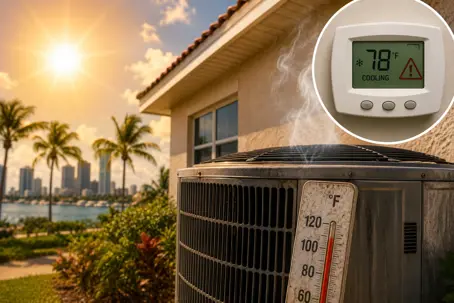
On the hottest Tampa afternoons, it can feel like your AC is running nonstop and still losing the battle against the heat. You glance at the thermostat every few minutes, wondering why it is stuck a few degrees higher than normal while the sun beats through the windows. Some rooms may feel okay, but others stay stuffy and warm no matter how low you set the temperature, and the whole house feels a bit on edge.
If that sounds familiar, you are not alone. Every year when the real Tampa heat and humidity arrive, we hear from homeowners who are worried that the weather is “killing” their AC. The system runs all day, the power bill climbs, and any little hiccup starts to feel like a sign that the unit is on its last legs. It is stressful, especially when everyone in the house is hot, tired, and looking to you to fix it.
At Air Masters of Tampa Bay, we have over 40 years of experience keeping Tampa Bay homes and businesses comfortable in this exact climate. We see the same patterns every time the first big heat wave hits, and we know what is actually happening inside your equipment when the outdoor temperature and humidity spike. In this guide, we will walk through how Tampa heat really affects your AC, what is normal, what is not, and what you can do to protect your system and your comfort.
Why Tampa Heat Pushes Your AC to Its Limits
To understand why Tampa heat feels so punishing on your AC, it helps to know what the system is trying to do. Your air conditioner is not creating cold air from scratch. It is moving heat from inside your home to the outside. The indoor coil absorbs heat from the air in your house and the refrigerant carries that heat to the outdoor unit, where the outdoor coil and fan release that heat into the outside air.
On a mild day, the outdoor air is relatively cool compared to the hot refrigerant. The system can get rid of that indoor heat fairly easily, so the pressures inside the unit stay moderate and the compressor does not have to work as hard. As the outdoor temperature rises, the difference between the hot refrigerant and the outside air shrinks, so the AC has to work harder to push the same amount of heat out of your home. That harder work shows up as higher pressures and higher temperatures inside the system.
Tampa throws another challenge into the mix. Our summers are not just hot, they are humid. Your AC has to pull moisture out of the air as well as heat. That moisture removal happens at the indoor coil, where warm, wet air from your home passes over a cold surface and water condenses out. It takes a lot of energy to remove that moisture. When humidity is high, your system runs longer to both cool the air and wring out that water, which means more hours per day of compressor and fan operation.
Over time, that longer run time in high heat and humidity is what really wears on components. At Air Masters of Tampa Bay, we keep this combination of high outdoor temperatures and high humidity in mind whenever we design, install, or service systems here in Tampa Bay. A unit that might be fine in a drier climate can struggle here if it is not set up correctly for Florida conditions, or if the home itself is adding more heat than the system was ever meant to handle.
What “Normal” AC Performance Looks Like on a Brutally Hot Day
A lot of frustration comes from expectations that do not match what an AC can realistically do in our climate. Many people assume that if the system is working properly, it should hit any temperature they set, no matter what is happening outside. In reality, central AC systems are designed around a reasonable indoor temperature difference compared to the outdoor temperature, not an unlimited cooling ability.
On a typical blazing Tampa afternoon, the outdoor temperature can sit very high, with heavy humidity on top. In that kind of weather, a healthy, properly sized system usually keeps your indoor temperature somewhere in a comfortable mid to upper 70s range. It might run for long stretches without shutting off to hold that line. That long run time is not always a sign of a problem. It is often exactly how the system is supposed to behave in extreme heat, because steady running is usually more efficient than rapid cycling on and off.
Another point that confuses people is the feel of the air at the vents. If you put your hand near a supply register on a very hot day, the air may not feel icy cold, but it should still be noticeably cooler than the room air. Technicians often talk about “temperature split,” which is the difference between the air going into the system and the air coming out. On a system that is running correctly, that difference typically stays within a certain range. Even if your thermostat number is not dropping as quickly as you want, a steady, healthy temperature split can mean the equipment itself is doing its job and the problem lies elsewhere.
Where we start to worry is when the thermostat temperature continues to rise while the system runs, the air coming out of the vents is no longer cooler than the room, or the unit starts to cycle off unexpectedly. You might also notice some rooms getting much warmer than others even though they used to feel even. Those are signs that something beyond simple outdoor heat may be involved. Our job is to sort out whether you are seeing the limits of design on a brutally hot day, or a real issue that needs attention.
How Tampa Heat Actually Wears Out AC Parts
When temperatures spike, the outdoor unit has to work harder to push heat into already hot air. That effort shows up as higher pressures inside the refrigerant lines and more strain on the compressor. The compressor is the heart of the system, and it uses a lot of electricity. In extreme heat, pressures can climb enough that the compressor gets very hot and may trip a safety device to protect itself. Repeatedly running at those higher pressures takes a toll and can shorten compressor life over time.
Electrical components feel the strain as well. Capacitors, for example, are small but essential parts that help motors start and run efficiently. During Tampa heat waves, we often see an increase in failed capacitors because they spend so much time energized in high temperatures. Contactors, which are the switches that bring high voltage to the compressor and fan, can also pit and wear faster when they are opening and closing more often under heavy load. Fan motors that constantly run in hot conditions can overheat and eventually seize.
Humidity and airflow issues show up in the indoor unit. When airflow is restricted by a dirty filter, clogged coil, closed vents, or a weak blower, the cold indoor coil can drop below freezing. Moisture in the air then turns to ice on the coil. On a milder day, that might take a long time to build up. On a very humid day, it can happen much faster because there is more moisture hitting the coil. Once the coil is iced over, the system cannot move heat at all, so you feel warm air from the vents or no airflow.
All of this explains why so many breakdowns happen on the hottest days. The weak spots that have been developing for a while finally show themselves when the system is under maximum stress. Our 24/7 emergency team sees the same types of calls repeat every year during the first big heat spike: overheated compressors, failed capacitors, frozen coils, and motors that have been pushed too hard for too long. Seeing these patterns up close is what lets us quickly connect the symptoms you describe to the most likely causes.
Why Your Home’s Insulation & Ductwork Matter More in Tampa Heat
It is easy to blame the outdoor unit when the house will not cool down, but the equipment is only part of the story. Your home itself can be adding a huge amount of heat that the AC has to fight all day. Poor attic insulation, sun-beaten roofs, large west-facing windows, and unshaded glass can all let heat pour into your living space faster than it can be removed. The hotter the surfaces inside your home get, the harder the system has to work to keep the air comfortable.
In many Tampa homes, the ductwork runs through a very hot attic. In the summer, attic temperatures can get far higher than the outdoor air, especially in the late afternoon. If ducts are leaky, they can pull hot, humid attic air into the system. If they are poorly insulated, cool air loses its chill as it travels to your rooms. The result is less cooling where you need it and more load on the AC as it tries to make up the difference. You may notice weaker airflow or warmer air in rooms farthest from the air handler.
We often find that rooms over garages, bonus rooms, and additions are the first to struggle on extreme days. These spaces may have less insulation, more exterior walls, or longer duct runs that leak or heat up. The thermostat might be in a more protected hallway, so it stops seeing the full effect, while the uncomfortable room stays several degrees warmer. From your point of view, it feels like the AC is failing, but a lot of the problem is actually in how the home is built and sealed.
When we inspect homes around Tampa Bay, it is common to see a combination of these issues. The AC unit might be doing everything it was designed to do, but the house is letting in so much heat or losing so much cooled air that the system never catches up. Addressing insulation and duct problems can dramatically reduce the strain on your AC, especially during heat waves, and often costs less than people expect compared to running an overloaded system year after year. Our technicians can help you understand where your home may be working against your AC and what improvements would make the biggest difference.
Common Signs the Tampa Heat Is Overloading Your AC
So how can you tell if your AC is just working hard, or if the Tampa heat is pushing it into dangerous territory? Some signs are normal for a hot day, such as longer run times or the indoor temperature creeping up one or two degrees during the absolute peak of the afternoon. Other symptoms point to problems that should not be ignored because they show your system is struggling beyond normal limits.
If your breaker to the outdoor unit is tripping repeatedly, that is a clear warning sign. Breakers trip when something is drawing more current than the circuit is meant to handle. In extreme heat, a struggling compressor or fan motor can pull extra amps. Resetting the breaker over and over without finding the cause risks serious damage. In this situation, it is better to have a licensed technician diagnose the problem before something fails completely or causes damage to the electrical system.
Ice on the refrigerant lines or on the indoor unit is another red flag. On a hot, humid Tampa day, a frozen coil usually points to airflow issues, low refrigerant, or a combination of both. You might notice weak airflow from the vents or warm air after the system has been running for a while. Shutting the system off and letting it thaw can prevent additional damage, but it will likely freeze again until the underlying issue is fixed by a professional.
Other signs of trouble include the outdoor unit shutting off while the indoor blower keeps running, loud buzzing or humming from the condenser, or a sudden change from cool to warm air with no change in thermostat setting. You may also see water pooling around the indoor unit if a drain line is overwhelmed. These symptoms often show up when the system is under maximum load in the heat. Because they can be tied to electrical and refrigerant issues, they are good reasons to call for help rather than trying to push the system through one more day.
When these problems happen in the middle of a Tampa heat wave, waiting for service is not always an option. That is why we make our 24/7 emergency repair service available, with licensed, insured, drug-tested, and background-checked technicians who can safely troubleshoot your system any time, day or night. Your comfort and safety come first, especially when temperatures are extreme and you need your AC to be reliable.
Smart Ways to Take the Pressure Off Your AC in Tampa’s Hottest Months
While we cannot turn down the Florida sun, there are several smart ways to make life easier for your AC during our hottest months. Small changes to how you use the system and maintain your home can add up to less stress on the equipment and fewer breakdowns when you need cooling the most. These steps also tend to improve comfort and can help with energy costs.
Start with thermostat habits. In brutal heat, chasing a very low number often does more harm than good. A steady setting in the mid to upper 70s, combined with ceiling fans to keep air moving, usually feels comfortable while keeping the system within a reasonable workload. Each degree you try to drop below that makes the AC run longer and harder. Pre-cooling the house in the morning, before the sun is high, can also help. The idea is to let the AC maintain temperature rather than constantly playing catch-up once the house and walls are already hot.
Basic maintenance makes a big difference when the heat is on. Clean air filters keep airflow strong through the indoor coil, which helps prevent freezing and allows the system to move more heat. Keeping the outdoor unit clear of leaves, grass clippings, and other debris allows it to breathe and release heat into the outdoor air more efficiently. Having coils professionally cleaned and refrigerant levels checked before or early in the season gives your system a head start before the highest load arrives. It also gives a technician a chance to spot worn electrical parts that are likely to fail under stress.
Home improvements can also lighten the load. Sealing obvious duct leaks, adding insulation in the attic, shading sun-baked windows, and addressing hot spots can cut the amount of heat your AC has to remove. Even small changes, like closing blinds on west-facing windows in the afternoon or using reflective window coverings, can reduce how much heat radiates into your rooms. These steps not only improve comfort, they also reduce run time and wear on components when the temperature soars.
For many of our Tampa Bay neighbors, a structured maintenance plan has been the simplest way to keep all of this on track. Our Shield Maintenance Agreement is designed to keep systems running smoothly in our climate, with scheduled tune-ups, thorough inspections, and preferred pricing and priority service. That kind of ongoing attention tends to catch small issues before they turn into major failures on the hottest days of the year, and it gives you a clear plan for caring for your system instead of guessing.
When It Is Time to Consider a New System for Tampa Heat
Sometimes, even with good habits and maintenance, a system reaches the point where it simply cannot keep up with Tampa’s climate any longer. Age plays a big role. An older unit that has already had several major repairs and still struggles on moderate days is more likely to let you down when the real heat hits. If we see a pattern of frequent breakdowns, uneven cooling, and poor performance even after cleaning and duct fixes, it may be time to talk seriously about replacement.
Newer AC systems are built with higher efficiency levels and advanced technology compared to units from years ago. When they are sized correctly for your home and installed the right way, they typically handle our combination of heat and humidity more effectively while using less energy. The key is making sure the system is matched to your home’s needs, ductwork, and actual heat load, not just swapping equipment based on the old unit’s size. A careful load calculation and duct evaluation help us recommend equipment that will perform well in real Tampa conditions.
At Air Masters of Tampa Bay, we are a Lennox Premier Dealer, a Trane Comfort Specialist, and a Carrier Factory Authorized Dealer. That means we install equipment from trusted manufacturers and our team receives continuous training on the latest systems and technology. We also stand behind our installations with a lifetime workmanship warranty, which covers the quality of the labor we perform and gives you confidence that the job is done right.
Cost is always a concern, especially when a replacement decision is not planned. We provide upfront pricing so you know the full cost before any work begins, and we offer flexible financing options for new AC installations, subject to credit approval. Our goal is to give you honest recommendations based on what we would do in our own homes, whether that is one more repair or a thoughtfully planned upgrade to a system that can better handle Tampa’s heat.
How Air Masters of Tampa Bay Keeps Tampa Homes Comfortable When Heat Spikes
Living and working in Tampa Bay, we feel the same heat and humidity you do. Over 40 years of serving this community has taught us that when the temperature climbs, homeowners need more than generic advice. They need clear answers about what is happening with their AC and a team they can trust to show up, tell the truth, and fix what actually needs fixing. That is the standard we hold ourselves to on every call.
When you call Air Masters of Tampa Bay, you are getting a family-owned, woman-owned local company with an A+ rating from the Better Business Bureau and a long track record of “cool service, above and beyond.” Our technicians are licensed, insured, drug-tested, and background-checked, and they arrive in uniform with photo ID badges so you can feel confident inviting them into your home. Whether you need a late-night emergency repair, a seasonal tune-up before the heat ramps up, or an honest evaluation of an aging system, we are here to help with upfront, fair pricing and flexible scheduling, including same-day and weekend service when available.
If the Tampa heat has you wondering whether your AC is in trouble, you do not have to guess. Reach out and let us take a thorough look at your system, your home, and your comfort needs, then walk you through your options in plain language so you can make a confident decision.
Call (813) 670-8860 today to schedule service and keep your Tampa Bay home comfortable, no matter how high the temperature climbs.